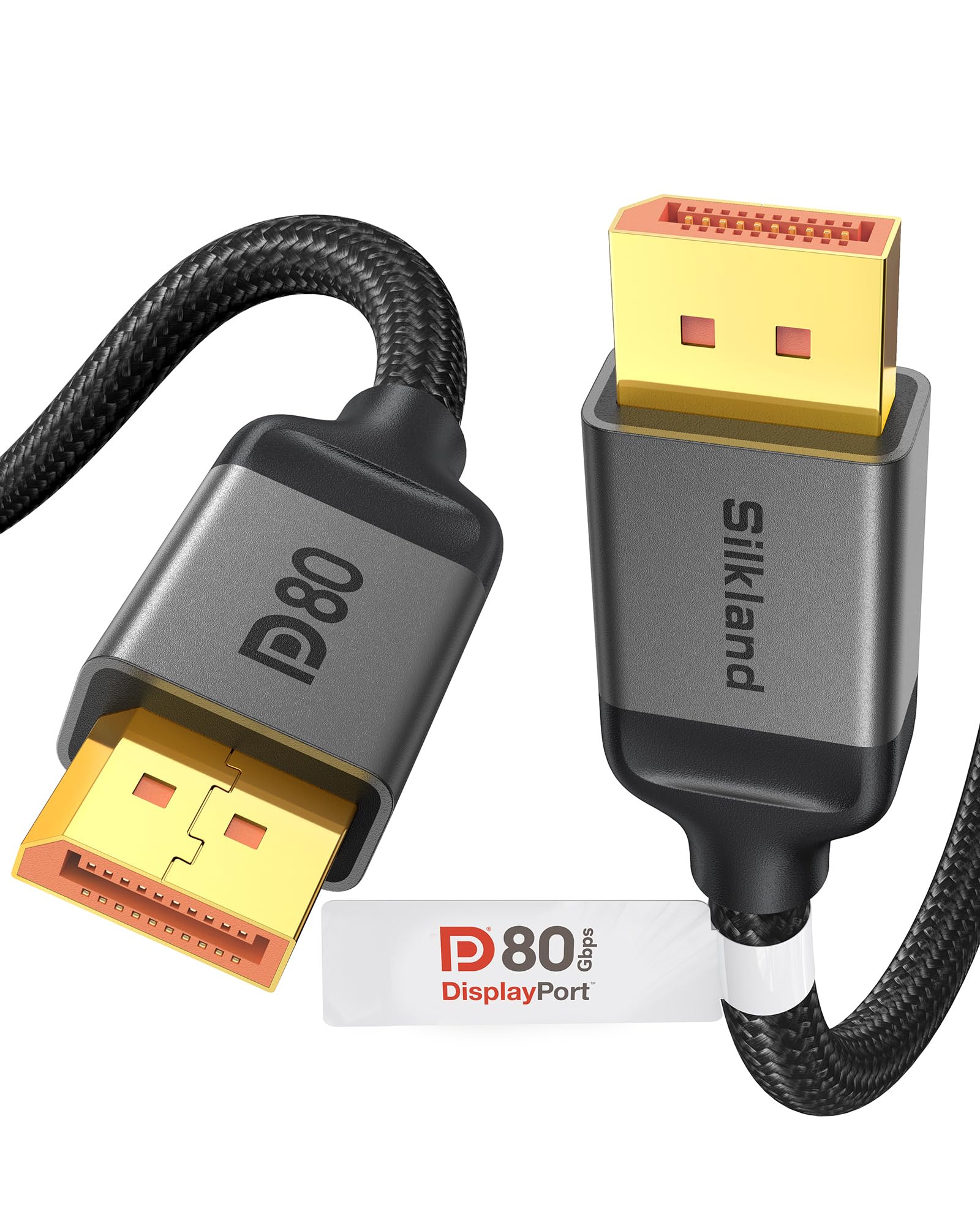
The Silkland DP80 DisplayPort Cable review centers on a compact 1.6-foot cable built for high-bandwidth connections between a gaming PC and monitor.
Its DP 2.1 UHBR20 support and broad compatibility make it appealing for demanding displays, provided both connected devices support the modes you want to use.
Silkland DP80 Review Summary
The quick verdict
2,000+ ratings
Read Amazon ReviewsSilkland DP80 DisplayPort Cable
A short, high-bandwidth DisplayPort cable for gamers connecting a DP 2.1 graphics card to a nearby compatible monitor.
- VESA-certified DisplayPort 2.1 cable with up to 80Gbps bandwidth and UHBR20 support.
- Listed uncompressed modes include 4K at 240Hz, 8K at 60Hz, and 2K at 540Hz.
- With DSC enabled, the specifications list up to 16K at 60Hz, 8K at 240Hz, and 4K at 540Hz, 480Hz, or 360Hz.
- Supports HDR10+, 3D, HDCP 2.3, VRR, FEC, ALLM, DSC 1.2a, and MST.

Pros
- High bandwidth and listed refresh-rate modes suit demanding gaming monitors when the source and display support them.
- A short length can keep a close PC-to-monitor connection tidy.
Consider before buying
- At 1.6 feet, its reach is restrictive if the PC is under a desk, positioned to the side, or needs a longer route.
- The highest resolutions and refresh rates depend on support from the graphics card, monitor, and relevant settings such as DSC.
Read the full review summary
Silkland’s DP80 is a VESA-certified DisplayPort 2.1 cable rated for up to 80Gbps. The supplied specifications list uncompressed 4K at 240Hz, 8K at 60Hz, and 2K at 540Hz, with higher listed combinations available when DSC is enabled.
It also supports HDR10+, VRR, ALLM, MST, and multichannel audio pass-through, giving it a feature set aimed at modern gaming and high-resolution displays.
The main buying question is fit: at just 1.6 feet, this cable is suited to a close PC-to-monitor connection, not a desk where the computer sits far away.
It is most compelling when the graphics card and monitor both support DisplayPort 2.1 UHBR20; older DisplayPort devices can use the cable too, but the connection’s available modes depend on the connected equipment.
The buying factors
Silkland DP80 Scorecard
Editorial scores reflect listed features and buyer fit; they are not laboratory measurements or customer ratings.
Bandwidth ceiling
An 80Gbps rating and UHBR20 support target high-end DisplayPort 2.1 setups.
High-refresh potential
The listed uncompressed modes include 4K at 240Hz and 2K at 540Hz, with additional DSC combinations.
Gaming features
VRR, ALLM, FEC, DSC 1.2a, and MST cover several capabilities gaming and multi-monitor users may need.
Compatibility range
It supports DP 2.0 and 1.4 devices and lists compatibility with a wide range of monitors and graphics cards.
Build details
Gold-plated connectors, tinned copper conductors, triple shielding, and a nylon exterior are useful design features.
Cable reach
The 1.6-foot length works for nearby components but leaves little room for routing or a distant tower.
Key Features and Specifications of Silkland DP80
- VESA-certified DisplayPort 2.1 cable with up to 80Gbps bandwidth and UHBR20 support.
- Listed uncompressed modes include 4K at 240Hz, 8K at 60Hz, and 2K at 540Hz.
- With DSC enabled, the specifications list up to 16K at 60Hz, 8K at 240Hz, and 4K at 540Hz, 480Hz, or 360Hz.
- Supports HDR10+, 3D, HDCP 2.3, VRR, FEC, ALLM, DSC 1.2a, and MST.
- Backward compatible with DisplayPort 2.0 and 1.4, with uncompressed 7.1, 5.1, and 2.0 audio pass-through.
- A 1.6-foot male-to-male cable with 24K gold-plated connectors, 28AWG tinned copper conductors, triple shielding, and a nylon exterior.
Pros and Cons of Silkland DP80
Pros
- High bandwidth and listed refresh-rate modes suit demanding gaming monitors when the source and display support them.
- A short length can keep a close PC-to-monitor connection tidy.
- Backward compatibility supports use with older DisplayPort generations.
- The cable includes a range of gaming, HDR, multi-monitor, and audio features.
Consider before buying
- At 1.6 feet, its reach is restrictive if the PC is under a desk, positioned to the side, or needs a longer route.
- The highest resolutions and refresh rates depend on support from the graphics card, monitor, and relevant settings such as DSC.
- MST setups may require consistent cable types across displays, so check the intended configuration before expanding a mixed-port setup.
Who Should Buy Silkland DP80?
Good fit
Choose the Silkland DP80 if your PC and monitor sit close together and you want a VESA-certified cable with headroom for high-bandwidth DisplayPort 2.1 modes.
Before ordering, confirm the ports on both devices and the resolution and refresh rate you intend to run; the cable’s maximums alone cannot determine the mode the full setup will support.
It also makes sense for a gaming setup where features such as VRR, ALLM, HDR, and audio pass-through matter.
Its short reach may help avoid excess cable behind a compact desk, while the nylon exterior and shielding are practical construction details for a cable that may be routed or repositioned.
For multi-monitor use, check how your monitor and graphics card handle MST and whether your planned connections use DisplayPort consistently.
A quick measurement from port to port, including any routing around the desk, will help avoid discovering that the cable is too short after installation.
Who should skip it
Skip this model if your computer and monitor need a longer connection; 1.6 feet is the defining practical constraint.
Consider a different cable if your intended display mode depends on features your devices do not support. Verify the graphics card and monitor specifications together before buying.
How the Silkland DP80 Fits a High-Refresh Gaming Setup
Bandwidth matters only across the whole connection
The DP80’s 80Gbps rating and UHBR20 support make it suitable for systems designed around DisplayPort 2.1.
To reach a particular resolution and refresh rate, the graphics card, monitor, and selected display mode must align; DSC also changes which combinations are available. Check both device specifications and the monitor’s input settings against your target mode.
A short cable rewards careful placement
At 1.6 feet, the cable is best for a nearby tower, monitor arm, or compact desk arrangement. That can limit slack and simplify routing when the ports are close, but it leaves little margin for moving equipment.
Measure the actual route rather than the straight-line gap, allowing for bends and the position of the ports.
Construction features support everyday handling
The cable uses 28AWG tinned copper conductors, triple shielding, gold-plated connectors, and a nylon exterior.
These are design features aimed at signal integrity and durability, but they do not establish a particular measured lifespan or guarantee performance in every setup.
The connector has no latch, so buyers who prefer a locking connection should consider how the plug will be secured in their particular port placement.
Gaming and multi-display features need compatible devices
VRR, ALLM, HDR10+, and MST are useful only when the connected equipment and software support the corresponding functions. The DP80’s listed audio pass-through formats can also suit a setup that sends sound over DisplayPort.
For multiple screens, plan the routing and check the system’s MST support and connection types before assembling the chain.
Alternatives to Silkland DP80
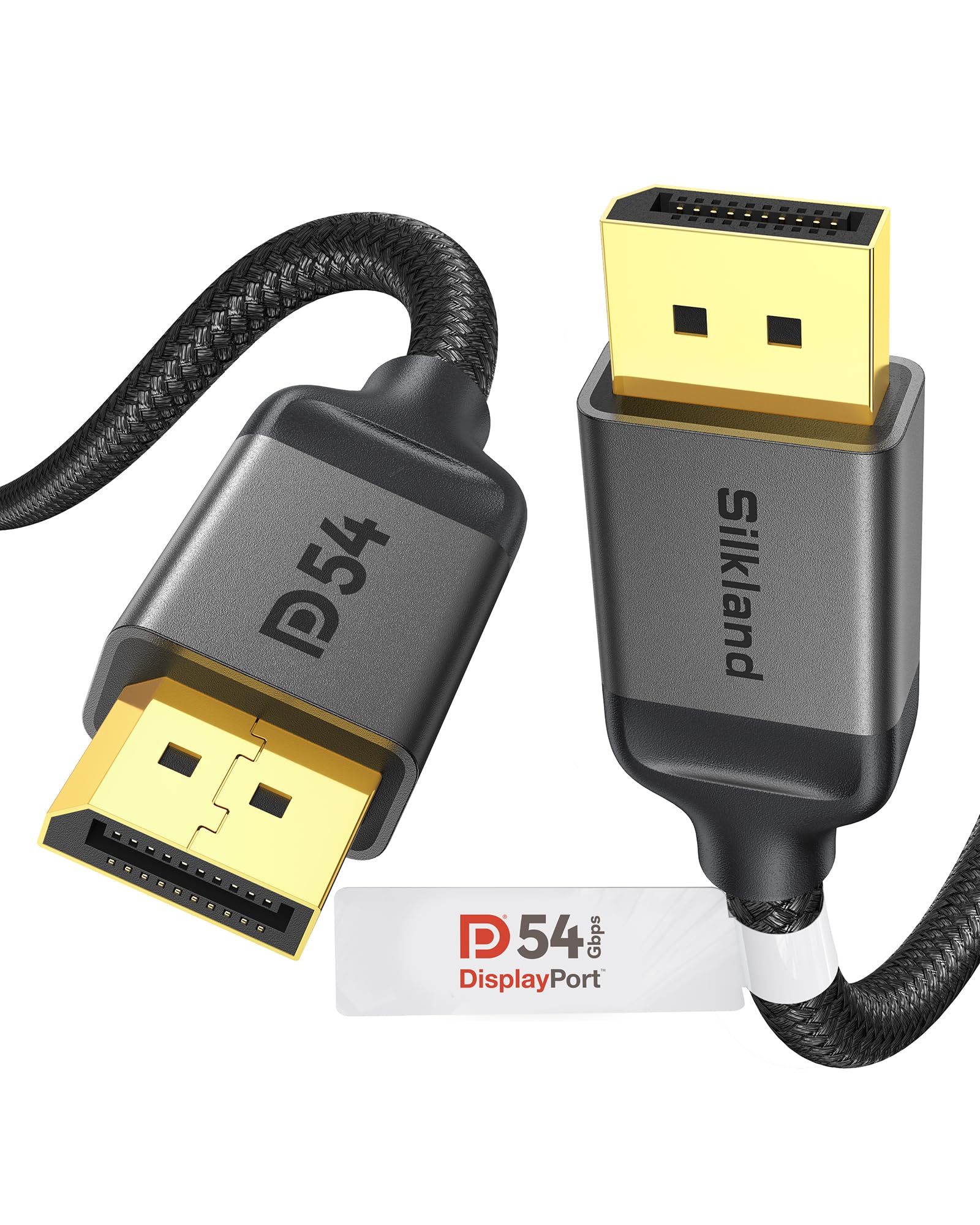
One supplied alternative offers a useful longer-reach option, but its 54Gbps rating differs from the DP80’s 80Gbps design.
Computer DisplayPort Cables alternative
7,000+ ratings
Read Amazon ReviewsSilkland 54Gbps DisplayPort 2.1 Cable, 10 ft
Choose the DP80 for a nearby setup where its higher listed bandwidth is relevant. Consider the 10-foot model when you need more reach and its listed modes fit your display and graphics card.
- This 10-foot Silkland cable is rated for 54Gbps and lists support for up to 16K at 60Hz with DSC, 8K at 120Hz, and 4K at 240Hz.
- It also lists Dynamic HDR, DSC 1.2a, MST, and backward compatibility with DisplayPort versions 1.0 through 2.0.
- The DP80 provides up to 80Gbps bandwidth and measures 1.6 feet, making it a high-bandwidth option for closely placed devices.
Is Silkland DP80 Worth It?
The Silkland DP80 is worth considering for a high-refresh gaming setup with DisplayPort 2.1 devices positioned close together.
Its bandwidth rating, feature set, and stated construction make it a capable fit for that use, subject to the equipment supporting the desired display mode.
Measure carefully before buying: 1.6 feet is short, and the full setup determines which resolutions and refresh rates are available.
If that reach suits your desk and your devices match the cable’s capabilities, the DP80 is a focused choice; if not, prioritize a cable length or supported mode that better fits your system.
Your review at a glance
2,000+ ratings
Read Amazon ReviewsSilkland DP80 DisplayPort Cable
A short, high-bandwidth DisplayPort cable for gamers connecting a DP 2.1 graphics card to a nearby compatible monitor.
- VESA-certified DisplayPort 2.1 cable with up to 80Gbps bandwidth and UHBR20 support.
- Listed uncompressed modes include 4K at 240Hz, 8K at 60Hz, and 2K at 540Hz.
- With DSC enabled, the specifications list up to 16K at 60Hz, 8K at 240Hz, and 4K at 540Hz, 480Hz, or 360Hz.
- Supports HDR10+, 3D, HDCP 2.3, VRR, FEC, ALLM, DSC 1.2a, and MST.