The Donner EM1 review comes down to a practical question: do you need a compact, rechargeable personal monitor amp with straightforward wired connections?
Its XLR and TRS inputs, stereo or mono source switch, and belt clip make it a simple option to consider for musicians monitoring through headphones or in-ear monitors.
Donner EM1 Review Summary
The quick verdict
800+ ratings
Read Amazon ReviewsDonner EM1
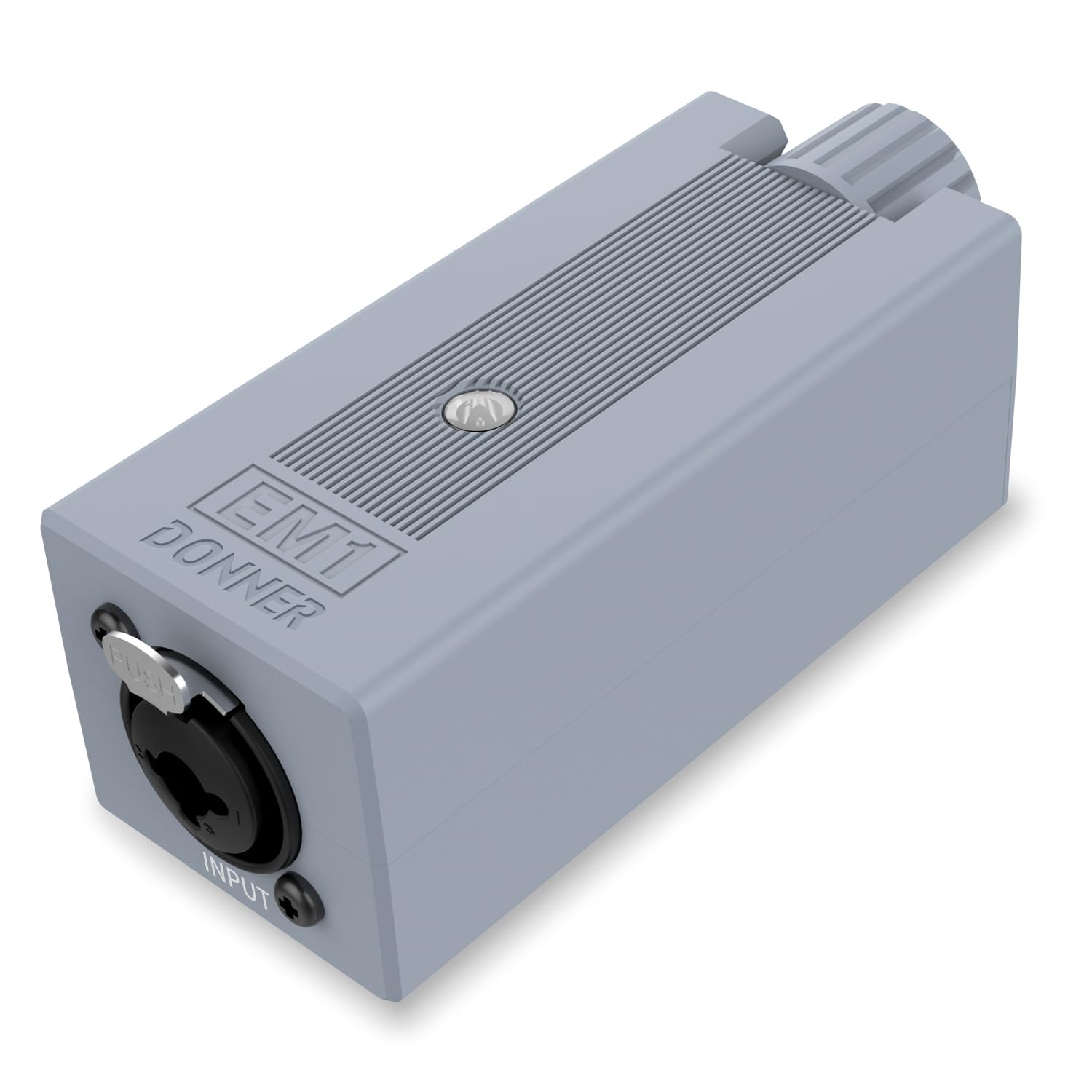
A portable rechargeable headphone amplifier for musicians who need a belt-clipped monitor amp with XLR or TRS input and a 3.5 mm output.
- XLR and TRS input connectors with a locking mechanism.
- 3.5 mm headphone or earphone output.
- Stereo/mono source switch, with operation depending on the cable connection.
- Rechargeable lithium-ion battery with up to 12 hours of listed runtime.

Pros
- Portable belt-pack format keeps the amp close while moving around.
- XLR and TRS inputs provide flexibility for compatible wired sources.
Consider before buying
- It does not support a microphone, so it cannot serve as a microphone preamp.
- The 3.5 mm output and input formats require buyers to check their existing cables and monitor connections.
Read the full review summary
The EM1 is designed to amplify a wired headphone or in-ear monitor signal in a portable format.
It accepts XLR or TRS input, provides a 3.5 mm output, and has a source switch for stereo or mono use depending on the cable connection.
Its volume control and rechargeable battery keep the setup focused on personal monitoring rather than a larger desktop system.
It may suit performers who want to clip an amp to a belt and move around while monitoring a feed from compatible audio equipment.
The listed battery life is up to 12 hours, which could be useful for longer sessions, though actual runtime depends on use. The product does not support microphones, so buyers should plan on a separate compatible audio source.
The buying factors
Donner EM1 Scorecard
Editorial scores reflect listed features and buyer fit; they are not laboratory measurements or customer ratings.
Portable design
A compact build and metallic belt clip are intended to make it easy to carry during use.
Input flexibility
XLR and TRS inputs accommodate two common connection formats, with a locking mechanism.
Monitoring options
A stereo/mono source switch offers a useful choice based on the connected cable.
Battery convenience
Rechargeable operation and up to 12 hours of listed battery life support portable sessions.
Headphone compatibility
Its high-power design is intended for professional headphones, including higher-impedance models, but the description gives no specific compatibility range.
Setup simplicity
The core layout is straightforward, though buyers need to match their source, cable, and monitor connection.
Key Features and Specifications of Donner EM1
- XLR and TRS input connectors with a locking mechanism.
- 3.5 mm headphone or earphone output.
- Stereo/mono source switch, with operation depending on the cable connection.
- Rechargeable lithium-ion battery with up to 12 hours of listed runtime.
- Power and battery-charging control with LED indicators.
- Metallic belt-pack clip and compact portable design.
- High-power amplification intended for professional headphones, including high-impedance models; microphone use is not supported.
Pros and Cons of Donner EM1
Pros
- Portable belt-pack format keeps the amp close while moving around.
- XLR and TRS inputs provide flexibility for compatible wired sources.
- The stereo/mono switch supports different monitoring setups.
- Rechargeable battery operation avoids relying on a permanent power connection during use.
Consider before buying
- It does not support a microphone, so it cannot serve as a microphone preamp.
- The 3.5 mm output and input formats require buyers to check their existing cables and monitor connections.
- Battery life is listed as up to 12 hours, so buyers planning long sessions should account for charging and actual runtime.
Who Should Buy Donner EM1?
Good fit
Consider the Donner EM1 if you need a small personal monitor amp for wired headphones or in-ear monitors and your source provides a compatible XLR or TRS connection.
The belt clip, compact design, volume control, and rechargeable battery suit a setup where you want your own listening level close at hand.
Before buying, map the signal path: confirm the source output, choose the appropriate input cable, and check that your headphones or in-ears can connect to the 3.5 mm output.
If you use a stereo feed, pay attention to the source switch and cable arrangement so the setup matches your intended monitoring signal.
The EM1 is most compelling when portability and personal wired monitoring matter more than microphone support or a broad feature set.
Its listed runtime of up to 12 hours can cover many sessions, but charging before a long rehearsal or performance is a sensible habit.
Who should skip it
Skip this model if you need an amplifier that accepts a microphone directly; the EM1 does not support microphone use.
Also look elsewhere if your setup cannot provide a compatible XLR or TRS input or needs a different headphone output connection.
It may not be the right fit if you want a fixed desktop headphone amp or a system with features beyond basic personal monitoring.
Check your headphone requirements and signal chain before choosing it, especially if you rely on higher-impedance headphones.
How the Donner EM1 Fits a Personal Monitoring Setup
Match the input to your source
The EM1 accepts XLR and TRS inputs, so the important buying step is confirming which connection your mixer or other audio source provides.
The locking mechanism can help keep a compatible cable secured at the amp, while the source switch lets you select stereo or mono operation according to the cable connection.
Plan around the headphone output
A 3.5 mm output makes the EM1 suitable for compatible headphones and in-ear monitors.
Check the plug and any adapter needs in your existing setup, and consider whether your headphones' impedance makes a high-power design useful for your monitoring routine.
Think about battery use
Rechargeable operation, LED indicators, and a listed maximum of up to 12 hours give the EM1 the basics for untethered use.
Runtime can vary with conditions, so charging it before a long session is a practical way to avoid depending on the maximum figure.
Keep the role in perspective
This is a personal headphone amplifier built around a wired signal path.
It does not support microphones, so it makes sense as the listening end of a monitoring setup rather than as a device for plugging in a mic and building a complete audio chain.
Alternatives to Donner EM1
No alternative model is recommended here. Compare the input, output, and portability features that matter to your routine before choosing another option.
Is Donner EM1 Worth It?
The Donner EM1 is worth considering if you want a rechargeable belt-pack headphone amp for personal wired monitoring, and your source and headphones match its XLR or TRS input and 3.5 mm output.
Its compact format, source switch, and up-to-12-hour battery specification address the basics without adding complexity.
Buy it for that focused use after checking the cable path and headphone fit. Choose a different kind of device if microphone support is essential or your setup needs connections beyond the EM1's documented design.
Your review at a glance
800+ ratings
Read Amazon ReviewsDonner EM1
A portable rechargeable headphone amplifier for musicians who need a belt-clipped monitor amp with XLR or TRS input and a 3.5 mm output.
- XLR and TRS input connectors with a locking mechanism.
- 3.5 mm headphone or earphone output.
- Stereo/mono source switch, with operation depending on the cable connection.
- Rechargeable lithium-ion battery with up to 12 hours of listed runtime.