The best science kits for kids turn curiosity into an activity children can handle, whether they want to grow crystals, explore outdoors, or try simple experiments. Choose by age, topic, and how much guided activity you want; these picks range from preschool tools to focused kits for older learners.
Quick Top Products
Learning Resources Primary Science Deluxe Lab Set
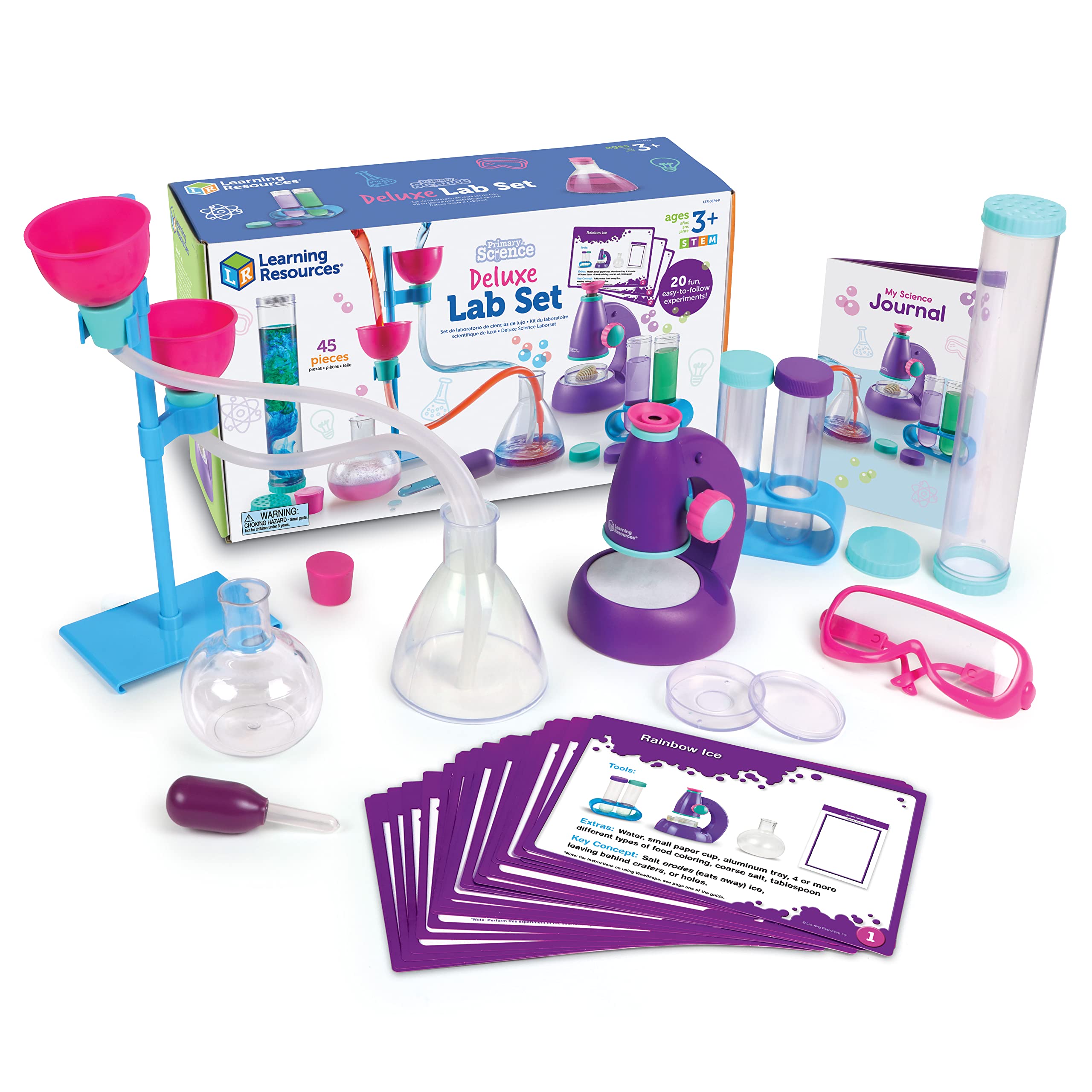
- Includes a microscope, test tubes, safety glasses, and other kid-safe tools.
- Offers 20 guided experiments using common household ingredients.
- Includes a microscope, test tubes, and safety glasses.
Best For: Young learners who want guided, hands-on science experiments with kid-sized tools.

Learning Resources Primary Science Lab Set, Pink
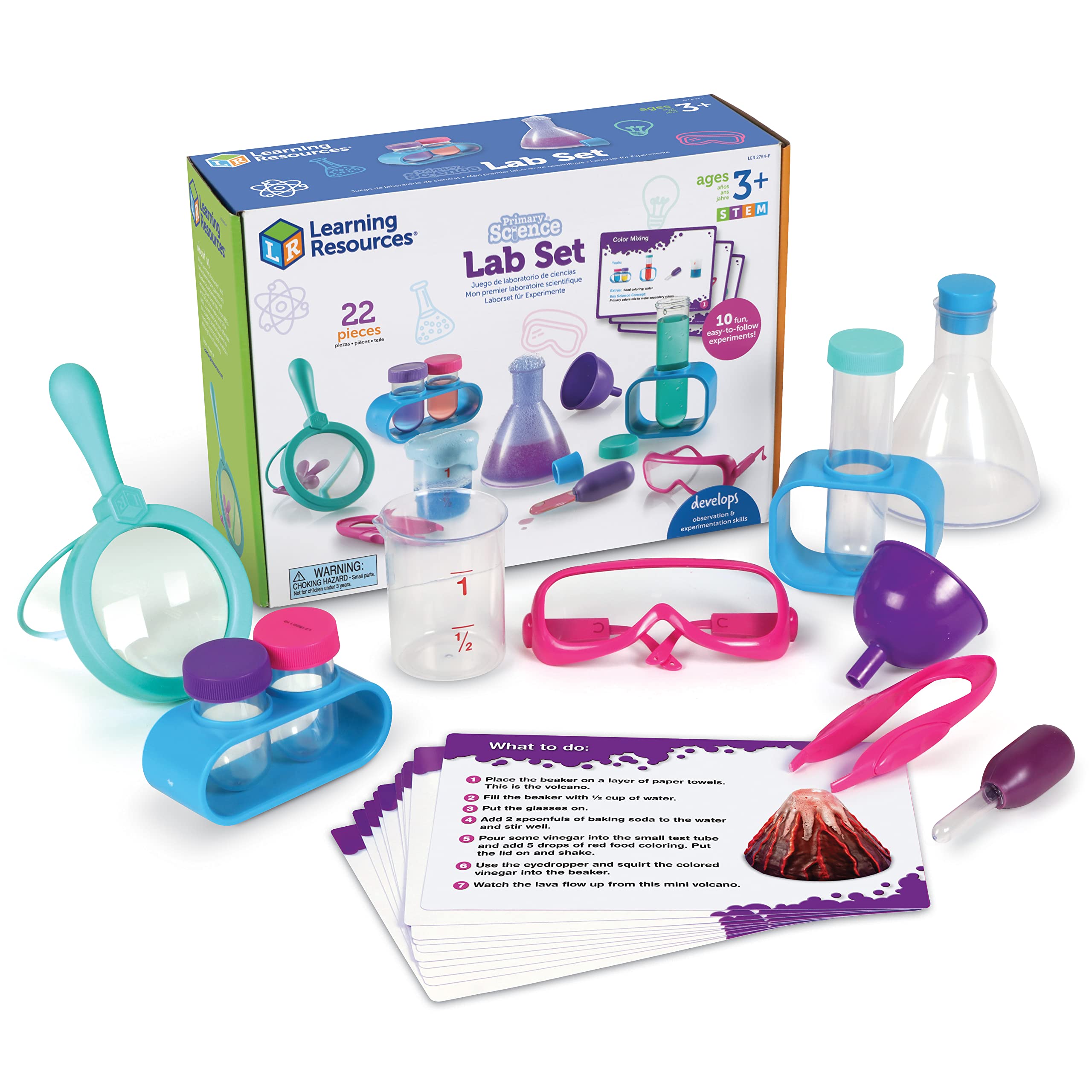
- Includes 22 pieces such as flasks, test tubes, and droppers.
- Ten double-sided cards guide experiments and discussion.
- Recommended for children ages 3 and up.
Best For: Preschool children beginning to practice observation and simple experiments.
Learning Resources Super Magnet Lab Kit
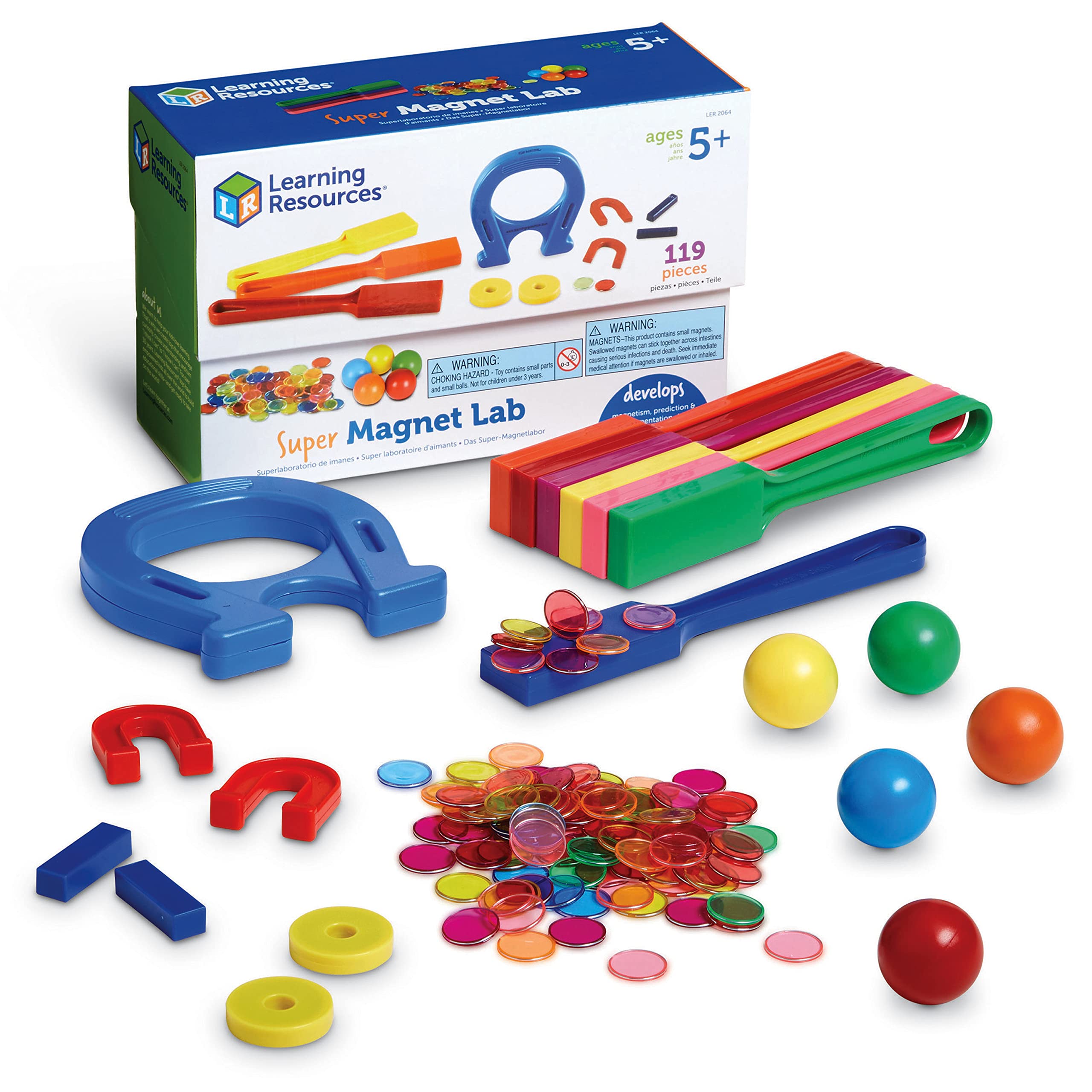
- A 119-piece kit focused on magnetic discovery.
- Includes magnetic chips, wands, marbles, and several magnet types.
- Designed for up to 25 students in Grade 1 and up.
Best For: Families, teachers, or groups exploring magnetism with multiple children.
hand2mind Magnetic Science Kit for Kids
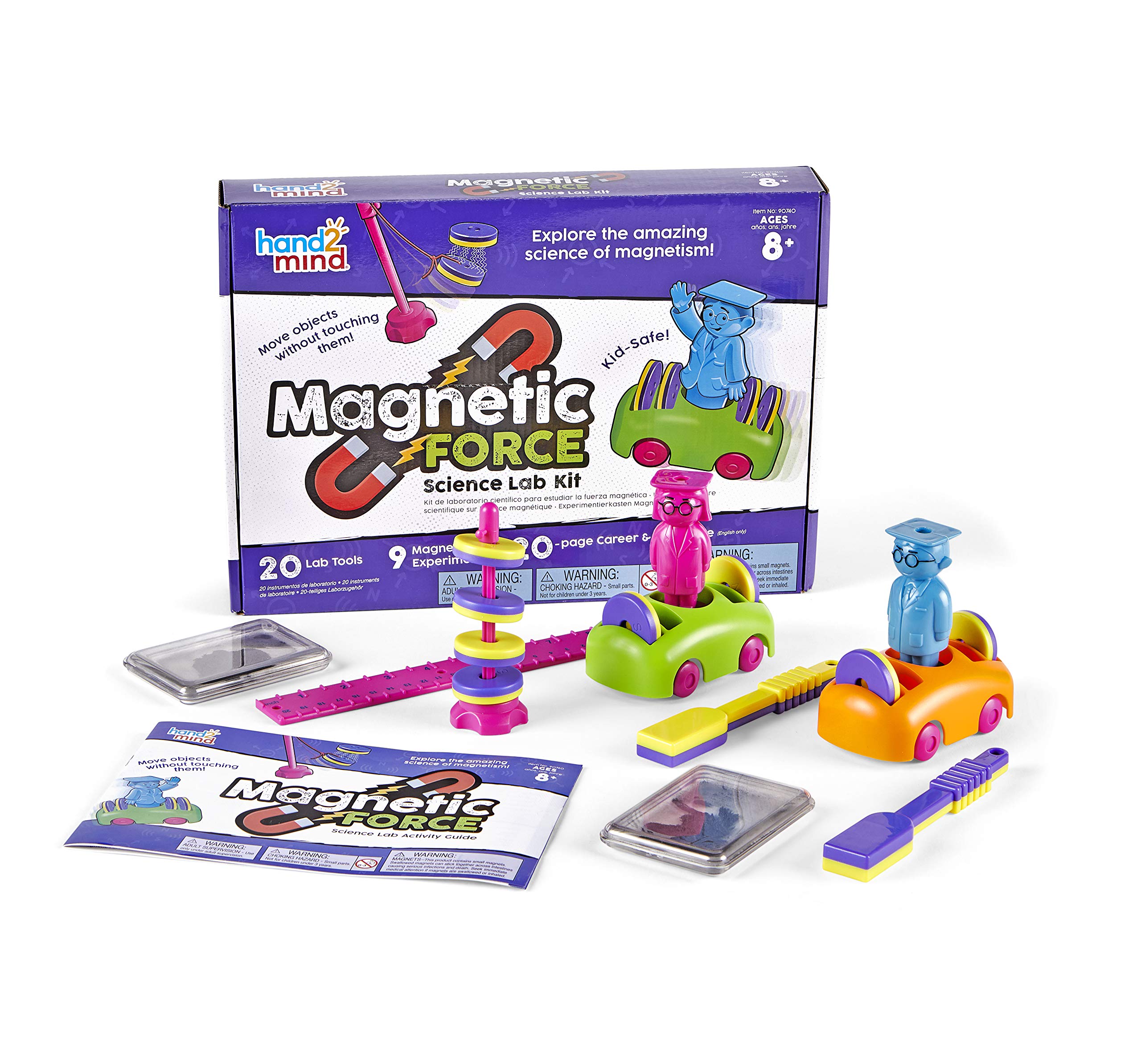
- Includes nine science experiments.
- Explores magnetic levitation and compass building.
- Comes with 20 lab tools and a 20-page guide.
Best For: Ages 8–12 who want a structured introduction to magnetism and compasses.
Dan&Darci Light-up Crystal Growing Kit
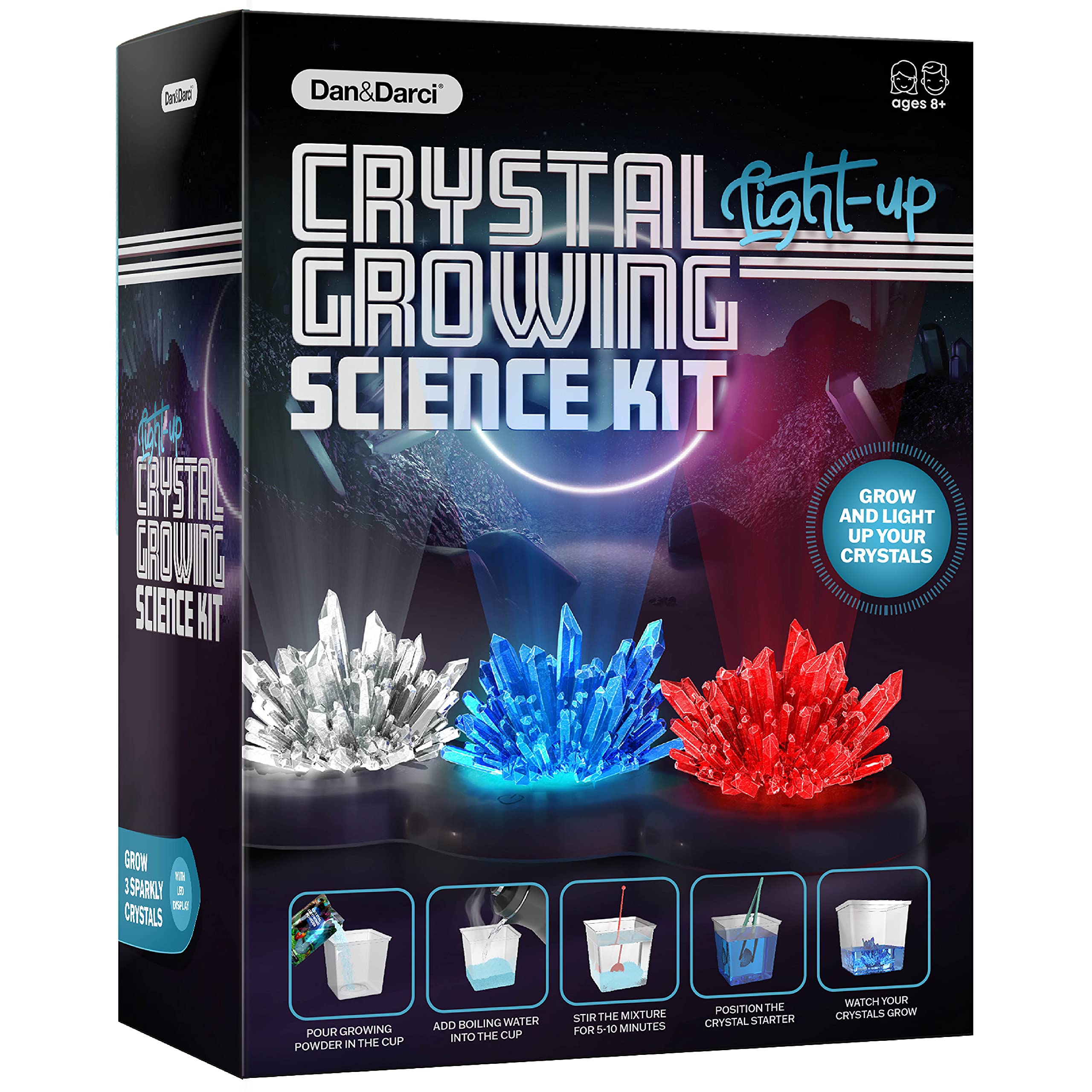
- Includes powders for red, blue, and clear crystals.
- Provides three growing cups and an illustrated 12-page guide.
- An LED display and Micro-USB cable illuminate the finished crystals.
Best For: Children ages 8–12 interested in watching crystals form and displaying the result.
Dan&Darci Rock Collection for Kids
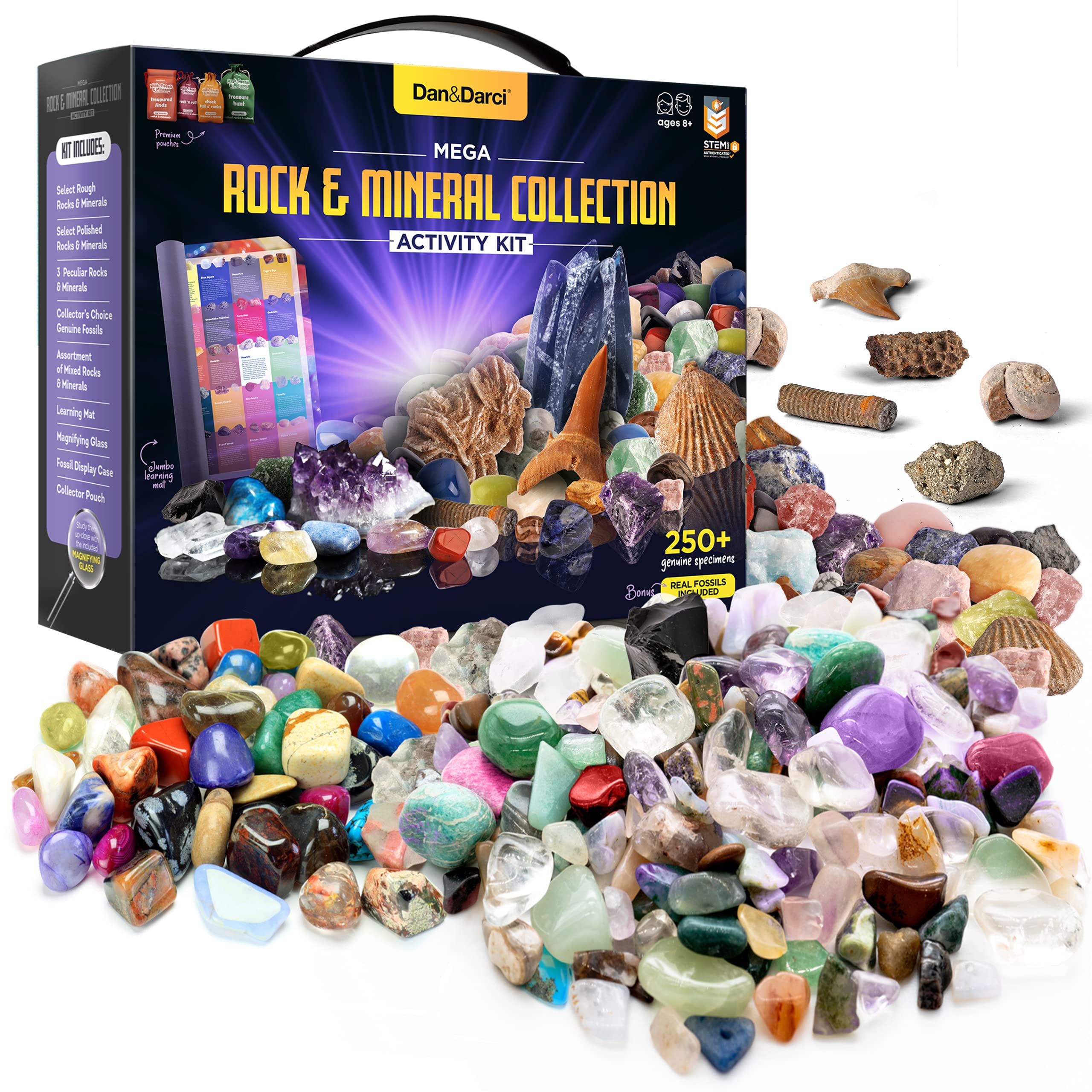
- Contains 250+ rocks, gemstones, crystals, fossils, and minerals.
- Includes a jumbo learning mat for comparing specimens.
- Comes with a magnifying glass, fossil display case, and pouch.
Best For: Children ages 6 and up who enjoy sorting, comparing, and collecting rocks and fossils.
Learning Resources Primary Science Jumbo Magnifiers
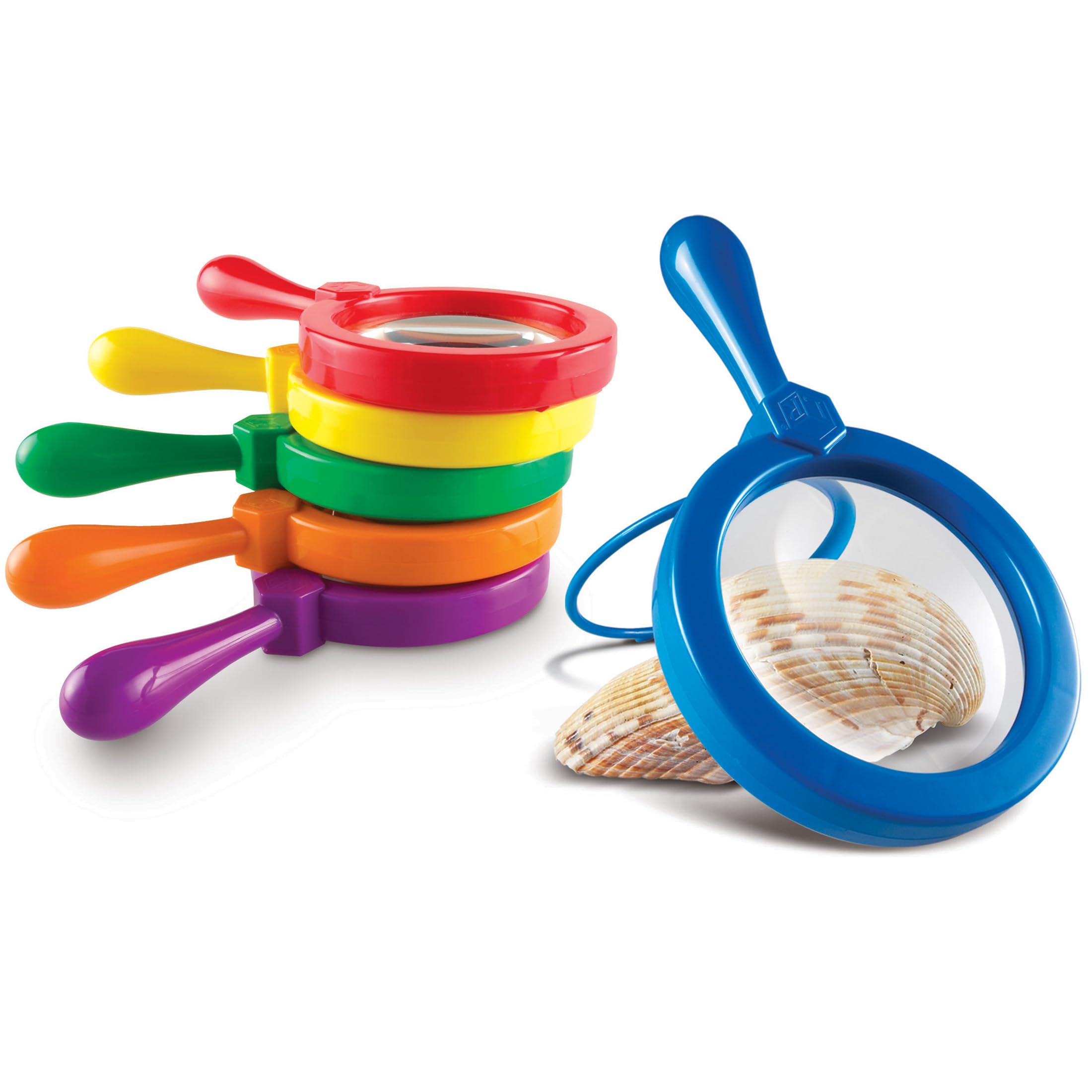
- Includes six jumbo magnifiers.
- Sized for small hands.
- Useful for examining critters, rocks, and fabric.
Best For: Preschoolers who want simple tools for inspecting objects outdoors or at home.
Dan&Darci Dig a Dozen Dino Egg Kit
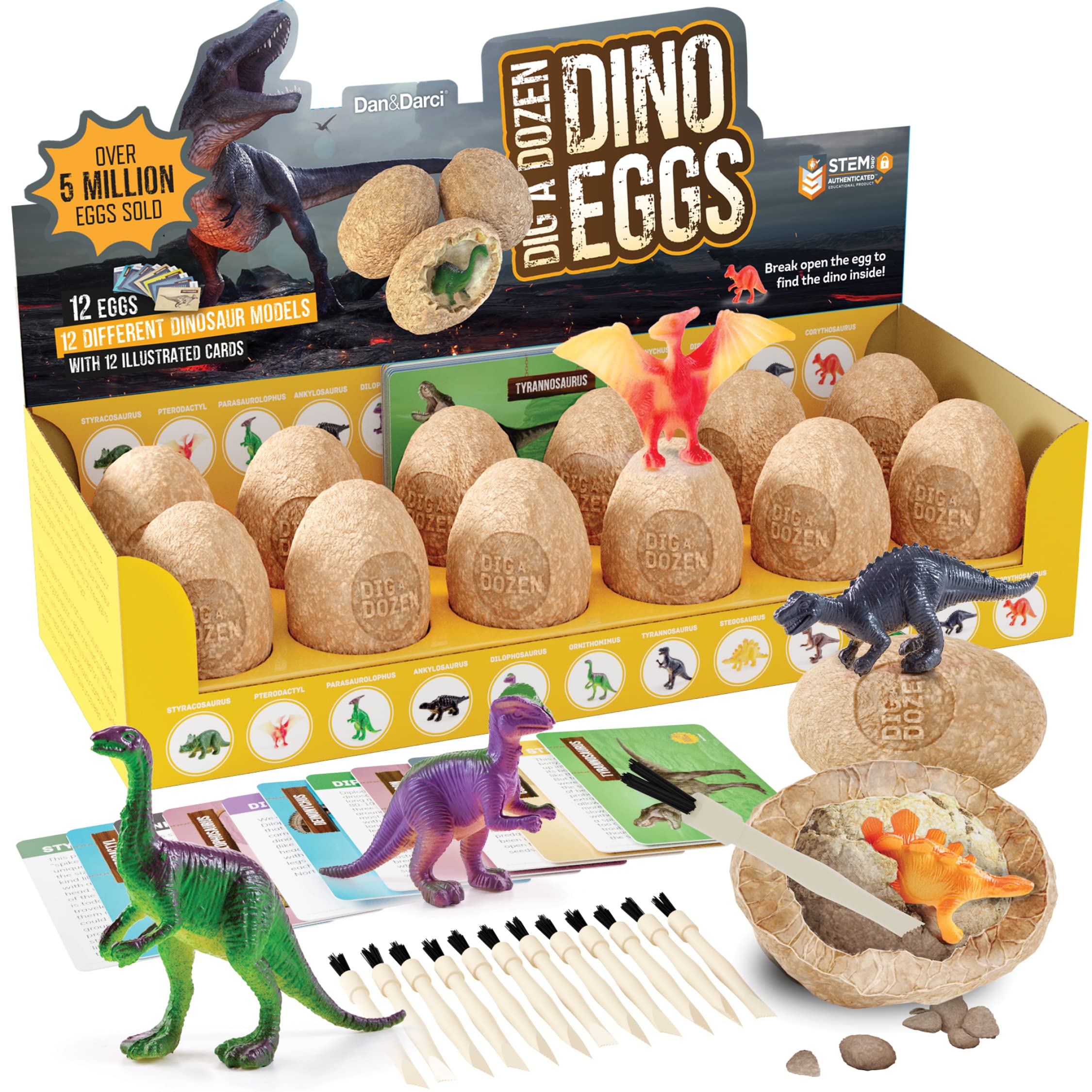
- Includes 12 eggs, each with a dinosaur model.
- Provides 12 chisels/brushes and 12 learning cards.
- Cards describe the history of different dinosaurs.
Best For: Dinosaur fans who want a shared excavation activity with learning cards.
Dan&Darci Light-Up Terrarium Kit
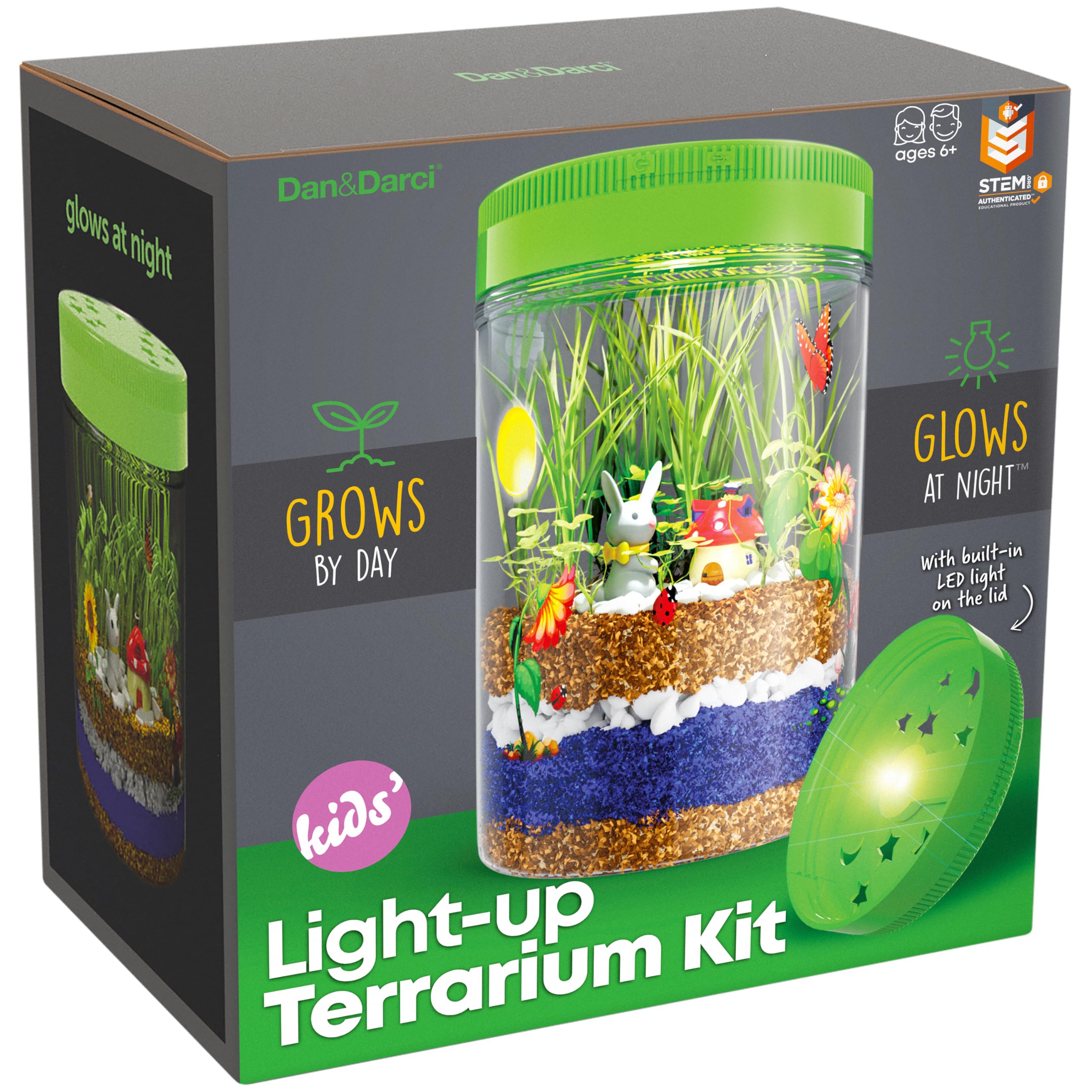
- Includes a 4 by 6 inch terrarium jar and light-up lid.
- Seeds include wheatgrass and chia.
- The lid recharges with an included Micro-USB cable.
Best For: Children ages 6–12 who enjoy planting seeds and decorating a small garden.
Educational Insights GeoSafari Ladybug Garden
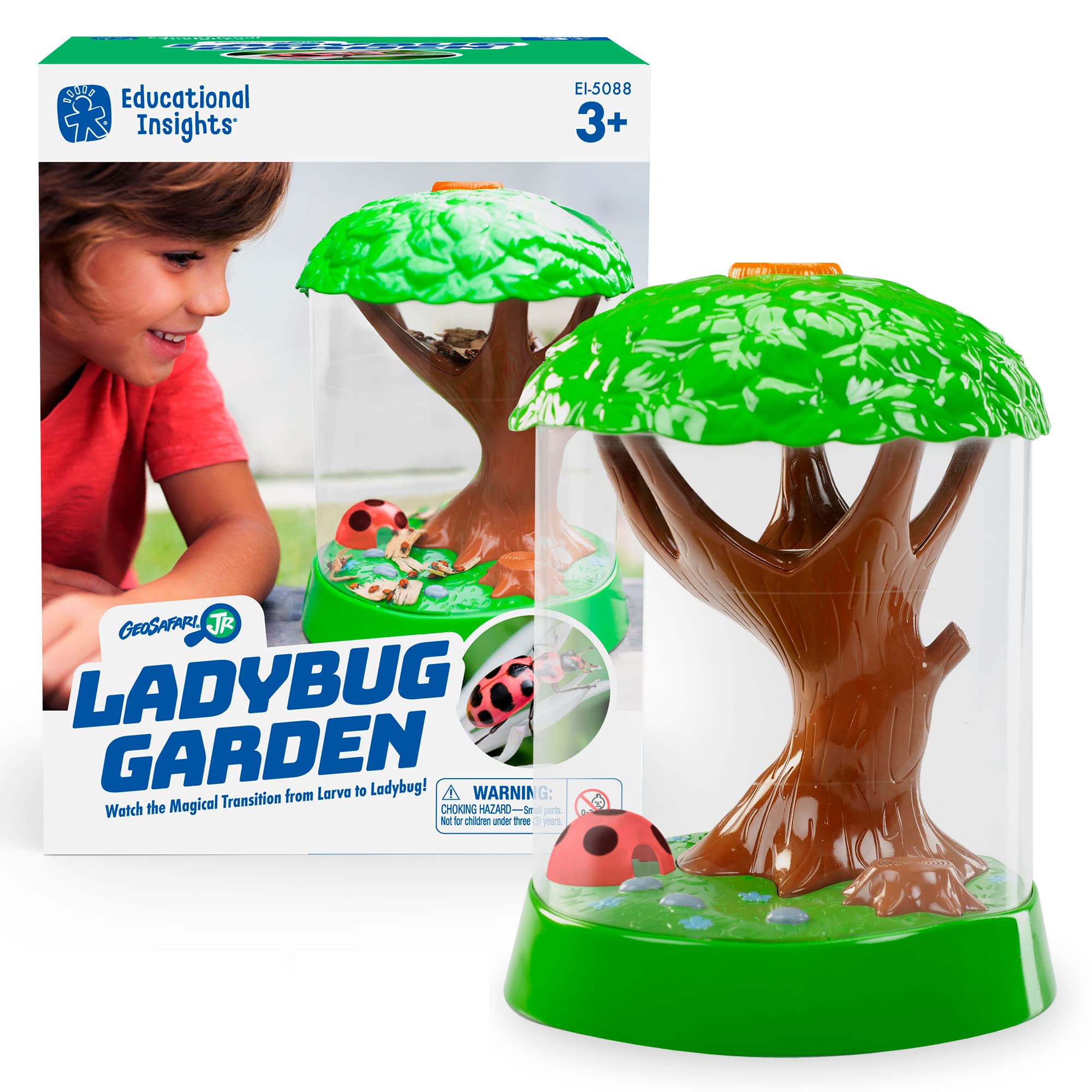
- The reusable habitat has three built-in 3x magnification spots.
- The guide includes facts plus writing and drawing prompts.
- Ladybug larvae require a separate order with additional terms and cost.
Best For: Children ages 3 and up interested in observing live insects and their growth.
Broad Experiment Variety
Learning Resources Primary Science Deluxe Lab Set - 45 Pieces, Ages 3+, Experiments for Kids, STEM Toys, Sensory Tube, Microscope for Students
This 45-piece lab set gives young children several ways to explore observation and experimentation in one box. It includes a microscope, test tubes, safety glasses, and other kid-sized tools, plus 20 step-by-step activities using common household ingredients.
That combination makes it a flexible choice for families looking for science kits for kids that can support repeated sessions rather than a single project. The set is designed for ages 3 and up.
Its broad activity mix means it is less focused on one science topic than a kit devoted to crystals, magnets, or insects, so choose it when variety matters most.
Best For: Young learners who want guided, hands-on science experiments with kid-sized tools.
| Pros | Cons |
|---|---|
|
|
Choose this set for a young child who is ready to try different simple experiments with adult help as needed. Its 20 guided activities and mix of tools offer broader variety than a single-topic kit, while the common household ingredients can make some experiments easier to set up.
Check which additional materials each activity needs and whether the child is comfortable following step-by-step directions.
First Lab Tools for Preschoolers
Learning Resources Primary Science Lab Set Pink - Experimentation and Observation for Kids, STEM Projects, Science Kits, Experiments, Pretend Play Scientists, Toddler Project Chemistry Toy
Designed for ages 3 and up, this 22-piece set introduces young children to science through simple tools and guided activity cards. Flasks, test tubes, droppers, tweezers, and a magnifying glass give little hands ways to pour, inspect, and handle materials.
Ten double-sided cards guide children through experiments and prompt them to describe their steps and results, bringing language practice into the activity. This is a useful fit for early science kits for kids when the goal is exploration with a caregiver or in a classroom.
It offers a focused set of tools and activities for early learners.
Best For: Preschool children beginning to practice observation and simple experiments.
| Pros | Cons |
|---|---|
|
|
Pick this set for a preschooler who benefits from manageable tools and an adult guiding the activity. The cards add prompts for talking through observations, while the larger deluxe lab set offers more experiments for families who want a broader range.
Before starting, review each card and gather any additional materials it may call for; the supplied details do not identify those requirements.
Classroom Magnet Exploration
Learning Resources Super Magnet Lab Kit - 119 Pieces, Ages 5+, STEM ,Toys for Kindergartner, Science Learning Activities for Kids,Back to School Supplies,Teacher Supplies
With 119 pieces, this magnet lab is arranged for broad, hands-on exploration of magnetic forces. Its components include magnetic chips, wands, marbles, and several styles of magnets, while an activity guide supports experiments and demonstrations.
It is designed to accommodate up to 25 students in Grade 1 and up, making it especially relevant to classrooms, homeschool groups, or families with several curious children. It is a substantial magnet-focused option for group exploration.
Check the included component count and guide details before buying, since the product information gives conflicting counts for some components.
Best For: Families, teachers, or groups exploring magnetism with multiple children.
| Pros | Cons |
|---|---|
|
|
Choose this kit when magnetism is the main learning goal or when several children will share the materials. Its mix of chips, wands, marbles, and bar, ring, and horseshoe magnets supports more varied exploration than a basic wand set.
The source details conflict on the total contents, so confirm the current package inventory before purchasing, especially if you need a particular number of pieces for a class.
Guided Magnet Experiments
hand2mind Magnetic Science Kit for Kids 8-12, Kids Science Kit with Fact-Filled Guide, Make Magnets Float and Build a Compass, STEM Toys, 9 Science Experiments
This magnetism kit is aimed at children ages 8–12 and centers on nine experiments, including making magnets float, moving a train with magnetic levitation, and building a compass. It includes 20 lab tools and a 20-page fact-filled guide with scientific principles and pictures, so children can pair the activities with explanations.
That structure suits families seeking a focused science kit for an older child rather than an open-ended collection of classroom components. The experiments give it a clear theme and sequence, while the larger Super Magnet Lab offers more pieces for group exploration.
Check the guide and tool requirements before starting each activity.
Best For: Ages 8–12 who want a structured introduction to magnetism and compasses.
| Pros | Cons |
|---|---|
|
|
This is a good match for an older child drawn to magnets and guided challenges. The nine experiments have a clear topic, and the 20-page guide supports learning the ideas behind the activities.
Choose the Super Magnet Lab instead when a larger set of components or use by a group is the priority. Review the guide before beginning so you can prepare any materials or supervision an experiment needs.
Glowing Crystal Growing
Light-up Crystal Growing Kit for Kids - Science Kits for Kids Age 8-12 - 6 7 8 9 10 Year Old Boy Birthday Gifts - Gifts for Girls - STEM Toys for 7 Year Old Boys, Experiment Crafts for Age 10-12 Years
This kit turns crystal growth into a multi-day science activity, with red, blue, and clear crystal powders, three growing cups, and a step-by-step illustrated guide. Children mix the ingredients, watch crystals develop over time, then place a finished crystal on the included LED display.
The display runs from an included Micro-USB cable, adding a presentation element after the growing process. It suits families who want a project with a visible result and some patience built in.
Unlike a kit of repeatable quick experiments, crystal growth takes place over time; check the instructions and allow space for the cups while the crystals form.
Best For: Children ages 8–12 interested in watching crystals form and displaying the result.
| Pros | Cons |
|---|---|
|
|
Choose this for a child who enjoys chemistry-themed projects and can follow a process over several days. The kit includes three cups and an illuminated display, giving the activity both a growing stage and a finished piece to show.
A magnet or lab set offers more immediate, repeatable experiments; this one is better when patience and the visual outcome are part of the appeal. Check the guide for timing and setup before opening the powders.
Geology Collection and Identification
Dan&Darci Rock Collection for Kids - Includes 250+ Bulk Rocks, Gemstones & Crystals + Genuine Fossils and Minerals - 2 Lbs. - Geology Earth Science STEM Toys Activity, Gifts for Boys & Girls Ages 6+
This collection gives budding geology fans many specimens to handle and compare. It includes 250+ rocks, gemstones, crystals, fossils, and minerals weighing 2 lb, plus a jumbo learning mat with pictures and facts to help children investigate what they find.
A magnifying glass, fossil display case, and collector's pouch round out the activity materials. Rather than guiding one experiment from start to finish, the kit supports open-ended identification and collection.
It is a strong fit for a child interested in geology or paleontology, especially when an adult can help connect specimens to the learning mat.
Best For: Children ages 6 and up who enjoy sorting, comparing, and collecting rocks and fossils.
| Pros | Cons |
|---|---|
|
|
Pick this collection for a child who prefers examining and organizing real specimens to following a recipe-like experiment. The 250+ pieces and learning mat create plenty to inspect, and the accessories help with viewing and keeping selected finds.
A crystal-growing kit offers a guided transformation activity instead. Check whether the child wants open-ended collecting and whether you can help with identification, since the notes do not confirm a detailed key for every item.
Small-Hand Nature Magnifiers
Learning Resources Jumbo Magnifiers - 6 Pieces, Ages 3+ Toddler Learning Toys, Exploration Toys for Kids, Magnifiers for Kids
These six jumbo magnifiers offer a straightforward way to turn a walk or tabletop activity into an observation exercise. They are sized for small hands and can help children take a closer look at insects, rocks, fabric, and other everyday objects.
The set does not include a guided experiment sequence, so it works best as an easy-to-use science tool alongside adult-led exploration, a nature journal, or a specimen collection. For families looking for science kits for kids with minimal setup, magnifiers can be an accessible first step.
Choose a more complete kit when you want instructions, materials, or a defined project in the box.
Best For: Preschoolers who want simple tools for inspecting objects outdoors or at home.
| Pros | Cons |
|---|---|
|
|
These magnifiers suit young children who are ready to inspect things around them but may not yet need a multi-step experiment. They are easy to pair with outdoor exploration or the rock collection in this guide.
They provide fewer built-in activities than the lab sets, so plan the objects and questions you want to explore together. The magnification level is not specified, so check that detail if it matters for a particular activity.
Dinosaur Excavation for a Group
Dan&Darci Dig a Dozen Dino Egg Kit for Kids - Basket Stuffers - Dinosaur Toys Gift 3-12 Year Old - 12 Eggs & Surprise Dinosaurs - Science STEM Activities - Boy Toy Party Gifts for Boys & Girls
This excavation kit turns a dozen dinosaur eggs into a hands-on paleontology activity. Each egg contains a dinosaur model, and the set includes chisels, brushes, instruction guides, and full-color learning cards that pair discoveries with information about each dinosaur.
The kit includes tools and cards for individual play or a group activity. The focus is on digging and identifying dinosaurs rather than conducting a broader range of science experiments.
Choose it when a child is excited by dinosaurs and tactile discovery, and prepare a surface that can contain the debris from excavation.
Best For: Dinosaur fans who want a shared excavation activity with learning cards.
| Pros | Cons |
|---|---|
|
|
Choose this for a dinosaur enthusiast who will enjoy digging, brushing, and matching each find to its card. The eggs and excavation tools support individual play or a group activity.
A geology set offers broader specimen exploration, while this one keeps the activity focused on dinosaur models. Set aside a cleanup area before starting and check the child’s readiness for the hands-on excavation process.
Build-and-Grow Terrarium
Dan&Darci Light-Up Terrarium Kit for Kids - STEM Science Kit - Educational DIY Toy for Boys & Girls - Birthday Gift - Craft Project Idea for Ages 6 7 8 9 10 11 12 Year Old - Craft for Boys
This terrarium kit combines planting, arranging, and decorating in a compact project. Its 4 by 6 inch jar comes with vermiculite soil, blue sand, river rocks, wheatgrass and chia seeds, plus a spray bottle and planting stick.
A rechargeable LED lid lets the terrarium glow after the seeds are planted, and the kit includes a Micro-USB cable. It fits children who want a nature activity they can build and revisit as it grows.
The kit requires attention after assembly, so consider whether the child will enjoy checking on the plants. Follow the charging instructions and use the stated standard adapter limit.
Best For: Children ages 6–12 who enjoy planting seeds and decorating a small garden.
| Pros | Cons |
|---|---|
|
|
Pick this terrarium for a child who wants to assemble a small garden and watch it develop after the craft session ends. The included seeds and planting materials make it a more nature-focused project than the crystal kit, while the light-up lid adds a display feature.
Its jar is compact, so check that the size suits the intended spot. Follow the included charging guidance, especially its adapter limit, before powering the lid.
Observe a Ladybug Life Cycle
Educational Insights GeoSafari Ladybug Garden - Ladybug House with Live Ladybugs, Bug Catching Kit, Terrarium Kit for Kids & Toddlers, Bugs for Kids, At Home STEM Bug Habitat for Boys & Girls Ages 3+
This reusable ladybug habitat introduces children to close observation of a living insect life cycle. The plastic house has a screw-on lid and three built-in 3x magnification spots, while an activity guide supplies facts and writing or drawing prompts.
The larvae are ordered separately through an included redemption card, and additional terms and cost apply. That makes this a distinctive choice among science kits for kids, but families should plan for the extra step and cost before buying.
It cannot ship to Alaska or Hawaii. Choose it when the child is interested in living insects and you are prepared to manage the larvae order and care process.
Best For: Children ages 3 and up interested in observing live insects and their growth.
| Pros | Cons |
|---|---|
|
|
Choose this habitat for a child who is curious about insects and can observe a living process with adult support. The three magnification spots and activity prompts encourage looking closely and recording observations.
The kit does not arrive with live ladybugs; larvae require a separate order and shipping fee, and geographic restrictions apply. Confirm availability and ordering terms for your location before choosing this option.
How to Choose Science Kits For Kids
How We Picked Science Kits for Kids
We prioritized products that give children a clear way to explore a science idea through guided experiments, observation, collecting, or building. The selected options cover early lab play, magnetism, crystal growth, geology, insects, and nature projects, with activities suited to different ages and interests.
We set aside classroom accessories, pretend-play gear, narrow anatomy displays, coding toys, and duplicate craft themes. That leaves kits with materials or structured activities that make the science connection clear, while recognizing that a specimen collection or habitat offers a different kind of learning from a lab experiment.
Comparing Science Kits for Kids
Start with the kind of activity your child is most likely to enjoy. The deluxe lab set offers 20 experiments and 45 pieces, while the preschool lab set uses 22 pieces and 10 activity cards for younger learners.
For magnetism, the hand2mind kit supplies nine experiments and a 20-page guide; the Super Magnet Lab offers a larger collection of components aimed at group exploration.
Other options emphasize a result that develops or can be revisited. Crystal growing takes place over time and ends with an illuminated display.
The terrarium combines planting with a small light-up garden, while the ladybug habitat supports observation of a living life cycle and requires a separate larvae order. The rock collection is more open-ended, with specimens and a learning mat for comparison.
| Product | Standout features | Best for |
|---|---|---|
| Learning Resources Primary Science Deluxe Lab SetCheck Price |
| Young learners who want guided, hands-on science experiments with kid-sized tools. |
| Learning Resources Primary Science Lab Set, PinkCheck Price |
| Preschool children beginning to practice observation and simple experiments. |
| Learning Resources Super Magnet Lab KitCheck Price |
| Families, teachers, or groups exploring magnetism with multiple children. |
| hand2mind Magnetic Science Kit for KidsCheck Price |
| Ages 8–12 who want a structured introduction to magnetism and compasses. |
| Dan&Darci Light-up Crystal Growing KitCheck Price |
| Children ages 8–12 interested in watching crystals form and displaying the result. |
| Dan&Darci Rock Collection for KidsCheck Price |
| Children ages 6 and up who enjoy sorting, comparing, and collecting rocks and fossils. |
| Learning Resources Primary Science Jumbo MagnifiersCheck Price |
| Preschoolers who want simple tools for inspecting objects outdoors or at home. |
| Dan&Darci Dig a Dozen Dino Egg KitCheck Price |
| Dinosaur fans who want a shared excavation activity with learning cards. |
| Dan&Darci Light-Up Terrarium KitCheck Price |
| Children ages 6–12 who enjoy planting seeds and decorating a small garden. |
| Educational Insights GeoSafari Ladybug GardenCheck Price |
| Children ages 3 and up interested in observing live insects and their growth. |
Choosing a Science Activity by Age and Setup
For preschool children, look for accessible tools, simple prompts, and activities an adult can guide. The Primary Science Lab Set is designed for ages 3 and up and includes cards to support observation and discussion.
Jumbo magnifiers can also suit an early nature walk, though they do not provide a guided experiment sequence.
Older children may enjoy more specific challenges. The hand2mind kit targets ages 8–12 with magnet experiments, while the crystal kit is designed for ages 8–12 and asks children to watch growth over time.
Check age guidance, adult involvement, and setup needs before choosing, especially for projects involving materials that must be mixed, planted, or observed over several days.
Planning a Home Science Project
Consider where the activity will happen and what follow-up it requires. Excavation and mixing projects are easier to manage when children have a suitable work surface and an adult nearby.
Crystal growing needs a place for cups to sit while the crystals develop; the terrarium needs periodic attention after planting. A habitat requires care and a separate larvae order, so check local availability and shipping restrictions in advance.
Also distinguish between repeatable experiments and tools for open-ended discovery. Magnet kits can support repeated testing, while magnifiers and rock specimens invite children to choose what to inspect.
Guided cards and booklets help structure an activity, but caregivers should review directions and gather any additional materials before beginning.
Who Should Buy Which Science Kit for Kids?
Choose a lab set for a young learner who wants variety and guided experiments, or the hand2mind magnet kit for an older child drawn to magnetic forces and compass building. Pick the Super Magnet Lab when multiple children will share the materials, after confirming the package contents.
For a child who loves collecting, the rock set supports comparison and identification. Choose the crystal kit for a patient, chemistry-minded learner, the terrarium for a child who wants to plant and revisit a small garden, or the ladybug habitat for close nature observation when the separate larvae order and care needs fit your plans.